
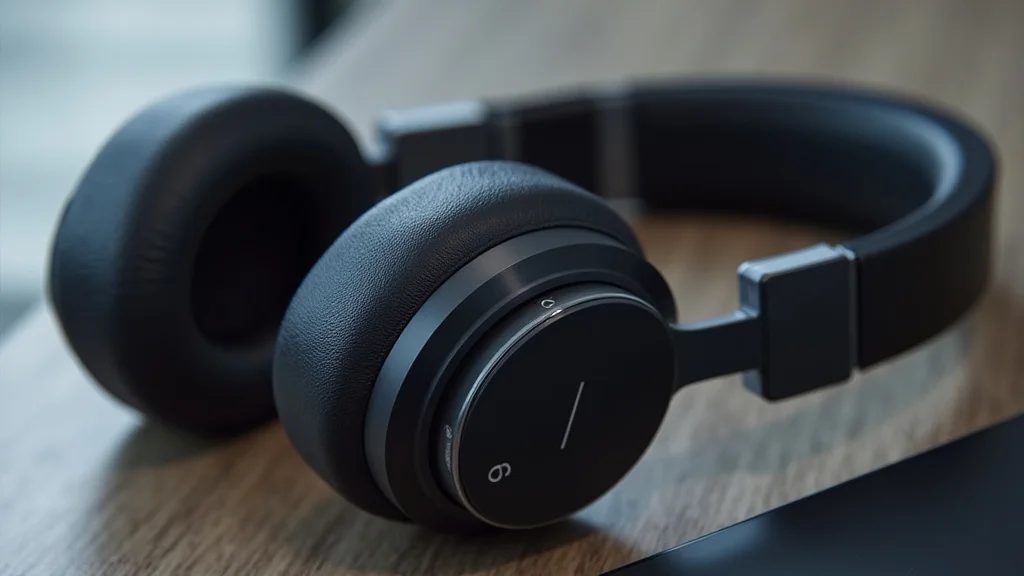
Getting new headphones bluetooth can seem a little tricky at first. You might wonder how to connect them to your phone or what all the buttons do. It’s okay if it feels a bit confusing!
This guide will make it super simple. We’ll walk through everything step by step so you can enjoy your music and calls without any hassle. Get ready to learn how easy it is to use your new pair.
Key Takeaways
- You will learn how to pair your headphones bluetooth with different devices.
- Understand the basic controls and functions of your headphones.
- Discover tips for keeping your headphones charged and in good condition.
- Find out how to troubleshoot common connection issues.
- Learn about different types of headphones bluetooth and their features.
Understanding Your Headphones Bluetooth
How Headphones Bluetooth Work
Headphones bluetooth are wireless audio devices that use a technology called Bluetooth to connect to your gadgets. This means no tangled wires! They send sound signals through radio waves.
This makes listening to music, podcasts, or taking calls really convenient. You can move around freely without being tied to your phone or computer. It’s a popular way to enjoy audio because of this freedom.
The Magic of Bluetooth Technology
Bluetooth is a short-range wireless technology standard. It allows electronic devices to exchange data over short distances. Think of it as a tiny invisible radio link between your headphones and your phone.
This link is established through a process called pairing. Once paired, the devices remember each other. This makes connecting quick and easy for future use.
Bluetooth uses radio waves in the 2.4 GHz ISM band. This is the same band used by many other wireless devices. However, Bluetooth has built-in mechanisms to avoid interference.
It also uses frequency hopping. This means it rapidly switches between different radio frequencies. This helps ensure a stable and reliable connection even when other devices are around.
There are different versions of Bluetooth. Newer versions are faster, more energy-efficient, and offer better range. For example, Bluetooth 5.0 and later versions have significantly improved speed and range compared to older versions.
This means clearer sound and less chance of your audio cutting out. Most modern headphones bluetooth use these newer versions.
Pairing Your Headphones Bluetooth
Pairing is the first step to connecting your headphones. You usually put your headphones in pairing mode. This is often done by holding down a power button for a few seconds.
You’ll see a light flash, usually blue or red and blue. Then, you go to your phone or device’s settings. You’ll find a Bluetooth menu.
Tap on it and look for your headphones’ name. Select it, and they should connect. It’s like introducing two devices so they can talk to each other.
The exact pairing process can differ slightly between headphone brands and models. Some might have a dedicated pairing button. Others might initiate pairing automatically when you turn them on for the first time or after a reset.
Always check your headphone’s user manual for specific instructions. It’s your best guide.
Once paired, your headphones will usually connect automatically whenever they are turned on and within range of your device. This automatic connection saves you time. You don’t need to repeat the pairing process every single time.
If they don’t connect automatically, you can usually re-select them from your device’s Bluetooth list.
Common Buttons and Controls
Your headphones bluetooth have buttons that control playback and calls. The power button is usually obvious. It often doubles as a play/pause button.
You might also find volume up and down buttons. These can sometimes be used to skip tracks by holding them down. There might be a button for answering or ending calls.
Some advanced headphones have touch controls instead of physical buttons. These can be very intuitive once you get used to them.
Learning these controls makes using your headphones much smoother. You can manage your music without needing to pull out your phone. For instance, a quick press of the power button might pause your music.
Pressing it again resumes playback. Holding it for a few seconds usually turns the headphones off. Knowing these basic functions helps you get the most out of your device.
Some headphones also have buttons or touch areas for activating voice assistants like Siri or Google Assistant. A double-tap or a long press might be all it takes. This is super handy for hands-free operation.
You can ask for directions, send a text, or get information without touching your phone. It adds another layer of convenience.
Choosing the Right Headphones Bluetooth
Benefits of Wireless Freedom
The biggest win with headphones bluetooth is the freedom they offer. No more getting tangled in wires while you exercise or work. You can leave your phone on your desk and walk around your office.
Or you can put your phone in your pocket and go for a run. This makes them ideal for active lifestyles. It removes a common annoyance for many people.
This wireless convenience extends to everyday tasks. You can listen to music while doing chores around the house. You can easily switch between listening to a podcast and taking a phone call.
The ability to move freely makes your audio experience more enjoyable and less restrictive. It really changes how you interact with your devices.
The technology has also improved greatly. Modern headphones bluetooth offer excellent sound quality. Many have active noise cancellation features.
This blocks out distracting background sounds. So, you can enjoy your audio without interruption, even in noisy environments. The combination of wireless freedom and advanced features makes them a top choice.
Types of Headphones Bluetooth
There are several types of headphones bluetooth. Over-ear headphones cover your whole ear. They often provide great comfort and sound isolation.
On-ear headphones sit on top of your ears. They are usually more compact than over-ear models. Earbuds or in-ear monitors fit inside your ear canal.
They are very portable and often come with charging cases.
Each type has its own advantages. Over-ear headphones are popular for home use or long listening sessions due to comfort. On-ear headphones are a good balance of size and sound.
Earbuds are perfect for travel and exercise. Many earbuds today are truly wireless, meaning no wires connect the two earbuds at all.
Consider your primary use when choosing. If you are a gamer or audiophile, over-ear headphones might be best for immersive sound and comfort. If you travel a lot, compact earbuds with a charging case are very practical.
For sports, secure-fitting earbuds or neckband-style headphones are often preferred. Think about where and how you will use them most.
Features to Look For
When buying headphones bluetooth, several features are important. Battery life is key. Look for headphones that last long enough for your needs.
Some offer 20-30 hours of playtime on a single charge. Sound quality is also crucial. Check reviews for opinions on bass, treble, and clarity.
Comfort is important, especially for long wear.
Other features include active noise cancellation (ANC) for blocking out noise. Water and sweat resistance is great for athletes. A built-in microphone is needed for calls.
Some headphones offer multipoint pairing, allowing connection to two devices at once. This is very useful if you use both a phone and a laptop.
Consider the Bluetooth version. Version 5.0 or higher generally offers better performance. Also, look at the codec support, like aptX or LDAC, if high-fidelity audio is a priority.
These are advanced audio technologies that can improve sound quality. For everyday use, standard codecs are perfectly fine.
Getting the Best Experience
Charging Your Headphones Bluetooth
Keeping your headphones charged is simple. Most come with a USB charging cable. You plug the cable into the headphones and then into a USB port on a computer or a wall adapter.
Some earbuds come with a charging case. The case itself holds a charge and can recharge the earbuds multiple times. This case is also charged via USB.
It’s a good habit to charge your headphones when you’re not using them. This way, they are always ready when you need them. Avoid letting the battery completely drain often, as this can reduce battery lifespan over time.
Many devices will alert you when the battery is low. Pay attention to these warnings.
Fast charging is a feature on some models. This means you can get a few hours of playback from just a short charge, like 10-15 minutes. This can be a lifesaver if you forgot to charge them overnight.
Always use the provided charging cable or a reputable replacement. Using the wrong cable could damage your headphones.
Battery Life and Usage
Battery life for headphones bluetooth can vary a lot. Basic earbuds might offer 3-5 hours per charge. Over-ear headphones often provide much longer, sometimes 20-40 hours or more.
Charging cases for earbuds can add many extra hours of power. For example, a case might provide 2-3 full recharges for the earbuds.
Battery performance can also be affected by how you use them. Features like active noise cancellation and high-volume listening use more power. Turning off ANC when not needed can extend battery life.
Similarly, listening at moderate volumes is more efficient than at maximum volume.
To get the most out of your battery, follow the manufacturer’s recommendations for charging and storage. For example, storing them in a cool, dry place can help preserve battery health. Over time, all rechargeable batteries degrade.
This is normal. However, proper care can help maintain their capacity for longer.
Troubleshooting Connection Issues
Sometimes, your headphones bluetooth might not connect. The first step is usually to turn both the headphones and your device off and then back on again. This simple restart often fixes temporary glitches.
Make sure your headphones are charged; a low battery can prevent pairing.
Check that Bluetooth is enabled on your device. Also, ensure your headphones are not already connected to another device. Many headphones can only connect to one device at a time.
If they are connected elsewhere, disconnect them from that device first.
You might need to “forget” the headphones in your device’s Bluetooth settings and then re-pair them. Go to your device’s Bluetooth settings, find your headphones in the list of paired devices, and select the option to forget or remove them. Then, repeat the pairing process from scratch.
This clears any old connection data that might be causing problems.
Common Myths Debunked
Myth 1: Bluetooth audio quality is always poor
This is not true anymore. While older Bluetooth versions and basic codecs could result in lower audio quality, modern Bluetooth technology has improved dramatically. With advanced codecs like aptX HD and LDAC, and newer Bluetooth versions, the audio quality can be very close to wired connections.
High-end headphones bluetooth now offer excellent sound for music lovers.
Myth 2: Bluetooth headphones are bad for your health
Bluetooth technology uses very low levels of radiofrequency (RF) energy. These levels are well below safety limits set by regulatory bodies worldwide. For perspective, your cell phone, which you hold to your head, emits significantly more RF energy than Bluetooth headphones.
The scientific consensus is that Bluetooth is safe for general use.
Myth 3: All Bluetooth headphones are difficult to set up
Setting up headphones bluetooth is usually straightforward, especially with modern devices. The pairing process, as described earlier, is typically a one-time setup. Most devices will automatically reconnect to previously paired headphones.
While there can be occasional glitches, it’s generally a simple plug-and-play experience for most users.
Myth 4: Bluetooth drains your phone battery quickly
While Bluetooth does consume some battery power, modern Bluetooth radios are very energy-efficient. The impact on your phone’s battery life is generally minimal for typical usage. Unless you are constantly streaming audio or transferring large files for extended periods, the battery drain is usually not a major concern for most users.
Frequently Asked Questions
Question: How do I know if my headphones bluetooth are charging
Answer: Most headphones bluetooth will have an indicator light that shows charging status. This light might be red while charging and turn blue or turn off when fully charged. Some charging cases also have lights that indicate the case’s battery level and when the earbuds inside are charging.
Question: Can I use my headphones bluetooth with my TV
Answer: Many modern TVs have built-in Bluetooth capability. You can usually find a Bluetooth settings menu on your TV to pair your headphones. If your TV doesn’t have Bluetooth, you might need to buy a separate Bluetooth transmitter that plugs into your TV’s audio output.
Question: How do I reset my headphones bluetooth
Answer: The reset process varies by brand and model. Often, it involves holding down one or more buttons for a specific period, sometimes with the headphones plugged into a charger. Check your user manual for the exact instructions to reset your specific headphones.
Question: What does ‘active noise cancellation’ mean
Answer: Active noise cancellation (ANC) is a feature that uses microphones to detect and cancel out ambient sounds. It creates an “anti-noise” signal that neutralizes external noise, allowing you to focus on your audio or enjoy quiet. This is great for noisy environments like planes or busy offices.
Question: How far can my headphones bluetooth reach
Answer: The range of Bluetooth headphones typically varies from about 30 to 100 feet (10 to 30 meters) in open spaces. This can be affected by walls, other electronic devices, and the specific Bluetooth version used by your headphones and device.
Wrap Up
Your headphones bluetooth offer a simple way to enjoy audio wirelessly. Pairing them with your devices is usually easy. You have learned about their basic controls and how to keep them charged.
If you have any trouble, restarting and re-pairing are often the best fixes. Enjoy your clear, wire-free sound experience.